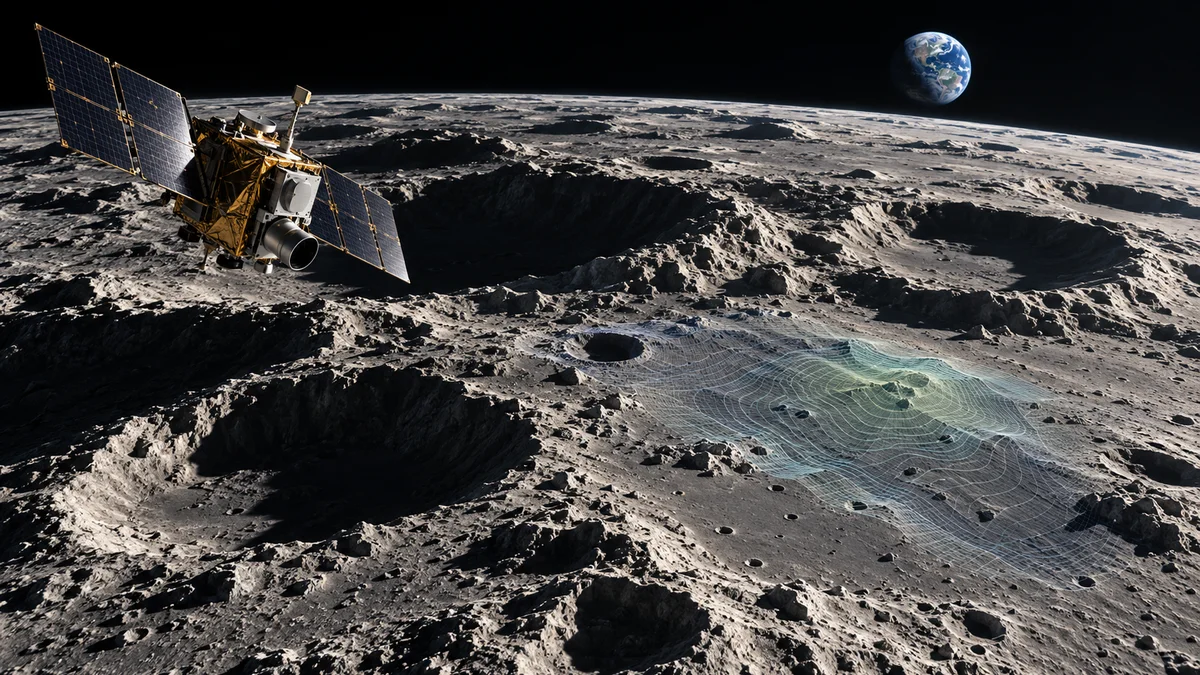
AI could help assess lunar landing locations, but a recommendation is not an approved site for a Moon base. Ohio State’s LUMINA is intended to support human mission planners, who retain the final judgment. The university describes preliminary work with further testing ahead. Read the university’s announcement.
For Solar System Live readers, the interesting journey is from finding the Moon in our simulator to understanding what would justify choosing one patch of its surface. This guide connects those questions through a practical comparison: planetary context, terrain evidence and a proposed decision.
What is the AI being asked to do?
LUMINA builds on LLaVA-LE, an earlier lunar vision-language model. Its proposed contribution is to perform analyses involving several steps and explain the evidence behind landing-site recommendations. That is the research described in Ohio State’s report.
The LLaVA-LE project page describes a foundation combining lunar imagery, gravity information and slope data. Its demonstrations include descriptions of terrain and answers to questions about it.
When inspecting those demonstrations, ask what the answer rests on. Can you identify the input image? Is the statement describing something visible, interpreting a feature or proposing an action? Those are useful distinctions even before you try to judge whether the answer is correct.
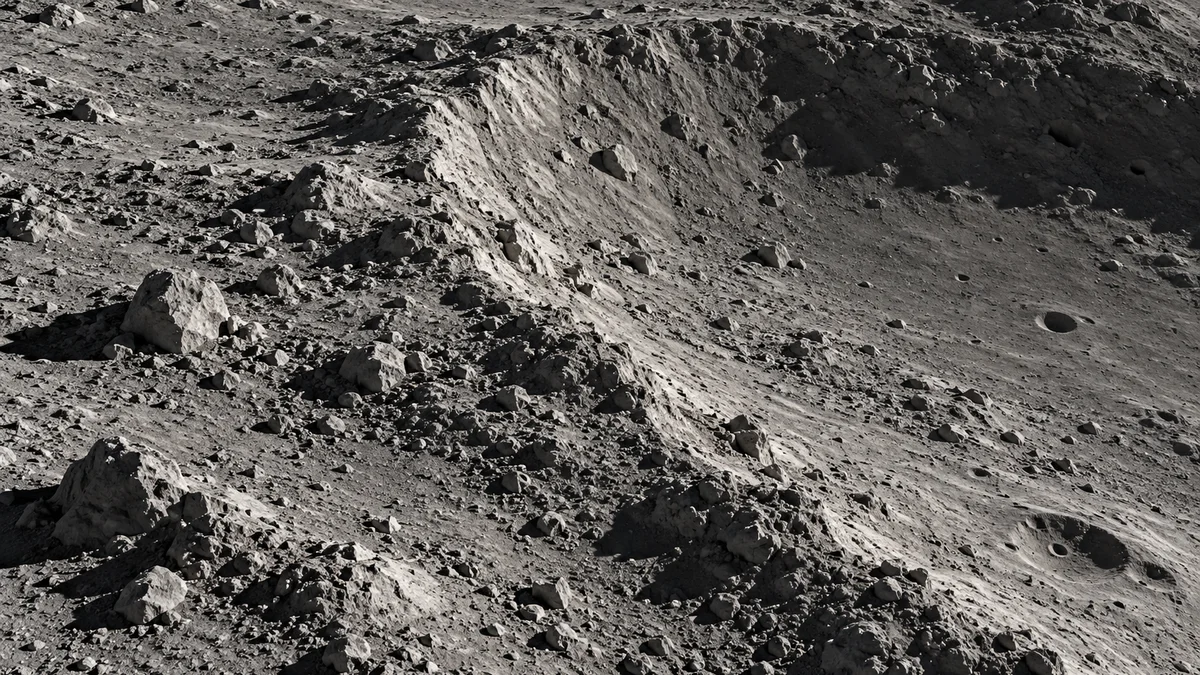
Why isn’t a convincing lunar view enough?
Start with the Moon in Solar System Live and identify Earth and the Sun. Treat this as an orientation exercise: name the destination and its planetary surroundings.
Now change the question to “where should a spacecraft touch down?” You have changed the evidence you are asking for. A location that is easy to point to on a globe still needs to be assessed for a particular mission.
NASA’s 2024 explanation of landing-region selection lists terrain, lighting, communication with Earth, scientific value and launch opportunities among the considerations. We use that dated account to explain the selection process, rather than as today’s mission schedule.
This gives you a useful reading test: when someone calls a location “best,” look for the conditions under which that judgment applies.
Which resource answers each question?
Our comparison below is a route through Solar System Live and the research resources. It is an editorial guide, not a ranking of lunar sites or a set of measurements produced by our simulator.
| Your question | Where to start | What to write down | |---|---|---| | Where is the destination in the planetary scene? | Solar System Live’s Moon view | The bodies you are using for orientation | | What information describes the surface? | LLaVA-LE’s project documentation | Which observations underpin the description | | What makes a location relevant to a mission? | NASA’s selection explanation | The criteria being considered | | Why should this recommendation be accepted? | The proposed analysis and its supporting evidence | What is demonstrated and what remains untested |
Try completing the last column yourself. If a resource does not answer a question, leave that entry open. An unanswered question is more informative than borrowing an answer from a view designed for another purpose.
How can you practise without pretending to plan a mission?
Choose one terrain example on the LLaVA-LE page. Write a brief description of what you can identify, then read the accompanying model response. Mark where the response goes beyond your own visual description. Your task is to locate claims that need supporting evidence, not to approve the terrain.
Our article on [reading a dark matter simulation](/articulos/simulacion-materia-oscura-que-muestra-la-imagen/) offers another exercise in separating a representation from what it establishes. The [water-on-the-Moon guide](/articulos/agua-luna-gravedad-flujo/) connects a lunar setting with a much smaller experimental question.
Begin with the Moon in Solar System Live, then open the research team’s terrain examples. Finish by writing one sentence: “Before accepting a recommendation here, I would need evidence for…” That missing evidence is the next thing to investigate.